
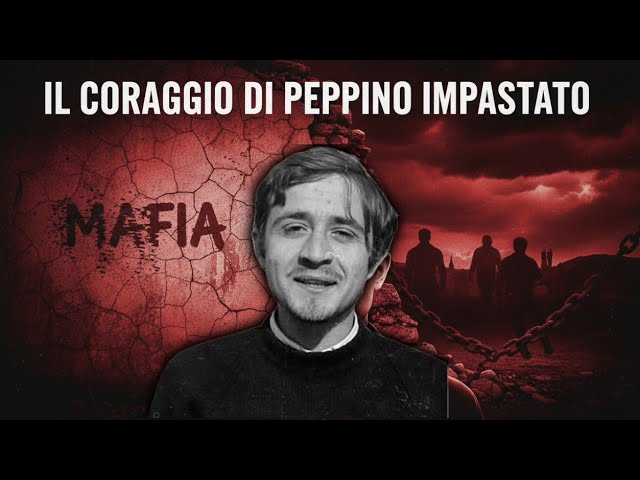
Peppino Impastato was a young Sicilian whose courage turned him into a symbol of resistance not by chance, but by choice. Growing up in Cinisi, in the province of Palermo, Peppino was born into a complex context: a family with mafia ties, a land steeped in omertà (silence), and a society where fear often ruled over justice.

Early Life and Political Awakening
From a young age, Peppino’s convictions diverged sharply from those of his surroundings. He studied philosophy, read widely, got involved with socialist and leftist movements, and helped found political and cultural groups to encourage free thought. He saw education not just as academic but as a tool for change one that had to be rooted in real life.
Radio Aut: A Voice for the Voiceles
In 1977, Peppino founded Radio Aut, an independent radio station broadcasting in the Cinisi Terrasini area. The station was self-financed and operated outside institutional control, which gave him the freedom to denounce powerful mafiosi.
One of his most listened-to programs was Onda Pazza (“Crazy Wave”), where Peppino used humour, satire, and parody to expose the operations of the mafia, especially targeting the local boss Gaetano Badalamenti, whom he mockingly nicknamed “Tano Seduto.” His mockery was sharp; his messages were clear. Through satire, he turned the unspeakable into words, breaking the silence that so many had been forced to endure.
The Cost of Speaking Out
Peppino’s activism extended beyond radio. He campaigned politically and stood with Democrazia Proletaria (Proletarian Democracy) in the 1978 municipal elections. As he became more vocal, he became visible and vulnerable.
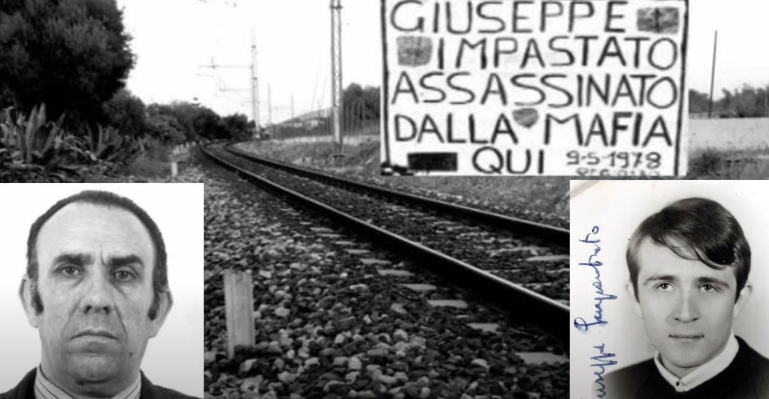
On the night between 8 and 9 May 1978, Peppino was murdered. The perpetrators placed his body on railway tracks and planted explosives, arranging it to look like suicide. At first, investigators accepted that narrative. Only later, after persistent efforts by his mother Felicia, his brother Giovanni, friends, and anti-mafia activists, was the mafia’s role recognized in the crime.
Legacy: More Than a Symbol
Though his life was cut tragically short at the age of 30, Peppino Impastato’s legacy endures. Institutions, cultural centres, and radio stations continue to carry his name and his vision of a Sicily free from fear. His voice, once transmitted through Radio Aut, is echoed today in the voices of those who fight against organized crime and corruption.
His story is not merely one of martyrdom it’s a lesson in courage, integrity, persistence, and the idea that changing a corrupt system begins with refusing to stay silent. In the video “Peppino Impastato: victim of the mafia,” viewers are reminded not only of his sacrifice, but of the ongoing necessity of speaking truth to power.