
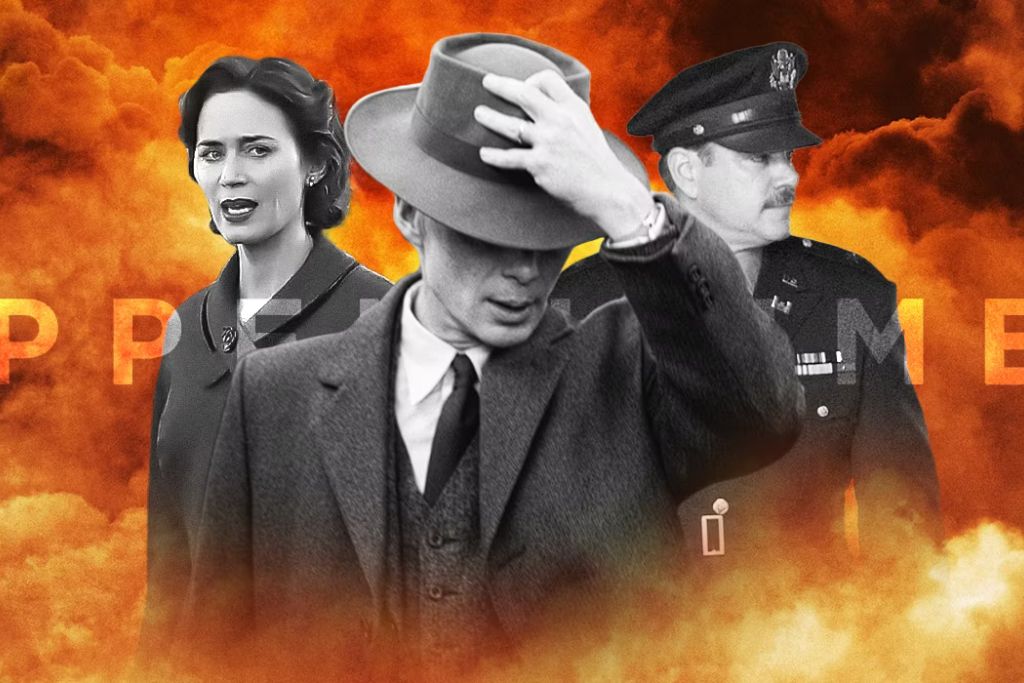
There is something intrinsically unsettling about a large-screen extravaganza that dramatizes the production of a weapon of mass destruction, regardless of whether the creation of such a weapon is warranted. However, British director Christopher Nolan has a long history of success when it comes to taking on huge topics and bringing them to life with soaring ambition. But even when he is at his absolute best, the man who is commonly referred to as the Father of the Atomic Bomb is still a figure fraught with complications. The movie reveals that while he was conducting research, he had romantic relationships with communist parties and was the focus of security investigations, both of which caused him to be separated from his peers.
His Life
As seen in Christopher Nolan’s new film, which opens this week, Oppenheimer was a complex man whose charismatic persona helped shape the world we live in. But it also meant that he could be a difficult leader.
His tendency to jump from one area of study to another frustrated his colleagues, especially when he dropped physics for months to read Proust or learn Sanskrit. He threw himself into trendy left-wing politics, throwing fundraisers for the communists during the Spanish Civil War. And he recruited impressionable students who fawned over him, even spending the night with one he tried to seduce.

While he had a complicated relationship with the Soviet Union, there is no evidence that he ever passed information to them,, as some have suggested. Although he was stripped of his security clearance in 1954, the government later vacated this decision. He died of throat cancer in 1967 at the age of 62. His legacy lives on.
His Work
A gifted leader, Oppenheimer was able to keep the scientists at Los Alamos focused on their work. Eventually, they produced two workable designs for the bomb: Fat Man and Little Boy. On July 16, 1945, they detonated the first nuclear device in history. By some estimates, more than 200,000 people died in the resulting explosions. Countless more have been left suffering from radiation sickness and other effects of the blasts until now.
Throughout his career, Oppenheimer sought to reconcile the scientific pursuit of knowledge with the practical application of that knowledge. He was a proponent of international control of nuclear weapons and opposed the development of a hydrogen bomb. These stances put him at odds with some governmental factions during the McCarthy-era Red Scare, which ultimately led to his revocation of security clearance in 1954.

The movie gives the life of this influential physicist a noirish quality, reflecting the way in which he grappled with the consequences of his colossal accomplishment. It also shows how he came to understand that the atomic bomb was not something he created on his own but rather “a collective effort of a whole group of people.”
His Influence
The movie is a morality play, a portrait of a brilliant but flawed man who lived through an era of dangerous ambitions. It’s about the way advancements in science are used for warfare and as a political tool.
The film is also a cautionary tale about the dangers of nuclear proliferation, a threat still present today. The United States and its allies continue to work to avert the spread of nuclear weapons, including by supporting multilateral arms control treaties and bilateral measures like security assistance.

A Harvard-educated theoretical physicist, Oppenheimer was friends with many of the leading scientists of his day, including Niels Bohr and Max Born. He was a brilliant teacher, who attracted a circle of promising young students. He loved to travel and he took long horseback rides in the New Mexico desert, a favorite place that restored his health after a bout with dysentery. Oppenheimer was a complicated man, and his legacy remains controversial.
His Legacy
With Vladimir Putin ramping up his war in Ukraine and other countries pursuing nuclear capabilities, it’s clear that Nolan couldn’t have chosen a more timely film. But what Nolan may have been less aware of as he was writing and shooting is how relevant the physics behind the story would become.
Physicists including Albert Einstein, Leó Szilárd, and Eugene Wigner warned that Germany could create an atomic bomb first, prompting the US government to assemble a crack team of scientists, headed by Oppenheimer. Enrico Fermi led a group of brilliant collaborators who helped him move the project to Los Alamos, New Mexico, where they were successful in producing the first nuclear chain reaction.

But the broader significance of his work wasn’t just about scientific prowess or military application; it was about how science could be weaponized and used to promote political agendas. During the McCarthy era, charges were made that Oppenheimer was a communist, and his security clearance was revoked (a decision that was posthumously reversed last year). He became a tireless advocate for nuclear disarmament.
In the world of cinema, 2014 was undeniably a year that left an indelible mark, and an article titled “Cinematic Gems of 2014: Must-Watch Movies for Every Film Lover” serves as a delightful treasure trove for cinephiles. This insightful piece of writing delves into the cinematic landscape of that year, highlighting the outstanding films that captured hearts, minds, and screens across the globe. From mesmerizing dramas that tugged at the heartstrings to mind-bending thrillers that kept audiences on the edge of their seats, this article lovingly curates a list of must-watch movies that continue to resonate with film enthusiasts even years later. It celebrates the art of storytelling, the magic of cinematography, and the incredible talent of the actors and directors who crafted these unforgettable cinematic experiences. For anyone seeking a journey through the cinematic gems of 2014, this article is an indispensable guide to a year that enriched the world of film.